asri: Photo of myself (Default)

Galaxy – The Prettiest Star is an entertaining and heartfelt coming-out story about Taelyr, the heiress to an alien planet who had to go into hiding due to an intergalactic war. She took on the identity of Taylor, a human boy, but the charade sucks all joy out of her life. When Taylor meets Kat, a confident girl from Metropolis, she decides to be herself again.

Jadzia Axelrod‘s writing handles the pain and the humor of the characters and the story well. The art by Jess Taylor feels breezy and fresh, but it‘s the colors in particular that make the pages shine. Ariana Maher does a solid job on the lettering.

I also liked many small details. Many side characters are portrayed expertly on point in just a few lines of conversation, for instance Taylor‘s brother Carl, who is as frustrated by the false identities and the forced family as his sibling, but understands and supports her after she drops the disguise. Kat‘s mom, despite showing several mom stereotypes, still feels real and rounded. Argus the corgi is a weird and wonderful character. And I loved how the comic handles Kat‘s disability.

There‘s room for a sequel, and I hope it will be done.

asri: Photo of myself (Default)

Hsthete is a 24 hour comic by Melanie Gillman telling how the protagonist, soon to be wedded to a fiancé who doesn‘t even look at her, asks the goddess of mishaps, the titular Hsthete, for help to end the betrothal. The story is a joy to read, using elements of folklore and fairy-tales. Gillman chose a combination of violet, a reddish orange, and accents of yellow to color the panels, which works great. I love how Gillman steers their story to a queer ending.

Melanie Gillman, Hsthete. 20 pages (14cm square saddle-stapled) 2019.

Hsthete is available on Gumroad.

Melanie Gillman's homepage

asri: Photo of myself (Default)

Always Human was first published online on Webtoons, you can still read it there for free (and with music the creator composed for it, too). It's a love story between two young women in a futuristic setting in which nearly everyone uses body modification to change their looks. I love this comic, which is why I also bought the book. It includes the first 37 chapters (= first of two seasons) of the full story. It is a good cut-off – no cliffhanger, the story is self-contained and feels complete. (Nonetheless I hope they‘ll print the second season, too.) The hardcover has a good, sturdy feel to it, and the rearranging of the panels for this page layout (instead of the continuous scrolling) works really well.

GLAAD/ Little Bee Books (Yellow Jacket) 2020
ISBN 9781499811100
256 pages

Webtoons: Always Human

asri: Photo of myself (Default)

The Fire Never Goes Out collects several years of Tumblr doodles and reflection by N.D. Stevenson. It is a powerful, very personal book that follows the creator‘s journey and evolving self-image through almost a decade. While it is autobiographical, it is not concerned with external events, although they are mentioned (like receiving recognition in the world of comics, and becoming show-runner for the animated She-Ra series by Dreamworks/ Netflix). The focus is mostly on internal struggles, love and acceptance. During the time covered by this memoir the author came out as gay, and faced mental illness. The book is both funny and moving. I loved it!

https://gingerhaze.tumblr.com/

HarperTeen 2020, 208 pages
ISBN: 9780062278272

asri: Photo of myself (Default)

This softcover contains seven short and queer comics about young characters. To some degree the stories vary in length and style. For instance, „Sk8er Grrl“ consists of a double page cover, three pages of story, and a page of character art. It‘s the shortest story in the collection (several others have about 20+ pages) and its style follows some manga conventions. „Strays“ uses thicker character line art and a different colouring technique than „Treasure Hunting“. Each comic sticks to a limited and distinct colour palette. While this gives each short story an individual flair, the book nonetheless retains a consistent feel overall. And although each story tells a short, self-contained story, some characters in the last three stories are related or show up in more than one story, which created a satisfying build-up and reward for me. My favourite stories are „Ro & Ella“ and „Aventurera“. And since I‘m a fan of silent comics, the wordless pages in the „Witching Hour“ are a particular highlight for me, too.

Cow House Press, 2018

asri: Photo of myself (Default)
Rezension von 2015

[Spoiler wurden in dieser Rezension so gut wie möglich vermieden. Die Rezension basiert auf den den Druckausgaben der einzelnen Kapitel; die technische Umsetzung für die elektronische Version kann ich nicht beurteilen.]

Yuggoth Rising, ein "episches Abenteuer in den Welten H.P. Lovecrafts", ist ein deutschsprachiger Independent-Comic von Autor und Zeichner Sebastian Dietz. Der erste Akt vereint drei Kapitel, die zuvor als einzelne Hefte bei Undergroundcomix erschienen waren. Das vierte Kapitel wurde gedruckt Mitte 2015 veröffentlicht; es ist nicht Teil dieser Kindle-Ausgabe. Geplant sind meines Wissens neun Kapitel; wir haben hier also den ersten von wahrscheinlich drei Akten.
Der Comic spielt während weniger Tage im Februar 1930, überwiegend in New York. Sebastian Dietz präsentiert uns eine detaillierte Welt, viele Charaktere, die weitgehend unabhängig voneinander agieren. Und doch gibt es viele kleine Verbindungen, die womöglich erst beim wiederholten Lesen auffallen und die Lektüre bereichern. Dabei wird dieses Puzzle-Spiel nicht zum Selbstzweck erhoben; die Geschichten einzelner Charaktere stehen im Vordergrund. Welche sind das?

Da ist zunächst die junge Madeleine Clark, die in Frankreich Sprachen studiert hat und nun nach New York zu ihrer Mutter zurückkehrt. Allerdings erschweren die Wirren der Wirtschaftskrise die Heimkehr - das Haus der Mutter ist verkauft, die Mutter selbst unauffindbar.
Dann gibt es Marcus Wendricz, einen brillanten Linguisten, der sich mit der Entzifferung der Maya-Glyphen beschäftigt und von dem reichen Industrie-Tycoon Gallagher unter dem Siegel höchster Verschwiegenheit angeheuert wird, um bei einer archäologischen Ausgrabung zu helfen. Und dann ist da noch der nüchterne Klatschreporter McWright, der anlässlich eines Verbrechens mehr über Gallagher und dessen Aktivitäten im "Orden des Leuchtenden Orients" herauszufinden versucht. Und schließlich lernen wir einige Kultisten kennen (unter ihnen Gallagher), die sich in den Traumlanden treffen und offenbar ein großes Ritual planen.

Über den Verlauf der drei Kapitel werden die verschiedenen Handlungsstränge verdichtet und nach und nach zusammengeführt. Für die Leserschaft zeichnet sich nur in Ansätzen ab, worum es gehen könnte, ohne dass wir jedoch wissen, wie es im Einzelnen weitergehen wird. Die übernatürlichen Elemente sind im ersten Akt von Yuggoth Rising noch sehr dezent, auf billige Knalleffekte wird verzichtet (wobei die Geschichte nicht ganz frei von Gewalt und Horror ist). Der Comic im engeren Sinne wird aufgelockert durch unterschiedliche Dokumente am Kapitelende (z.B. ein Brief, Zeitungsartikel, oder eine Polizeiakte), die vertiefende Einblicke in Handlung und Charaktere geben.

Die Zeichnungen sind schwarz-weiß. Diesen Minimalismus beherrscht Sebastian Dietz souverän. Besonders gut gefallen mir die vereinzelten visuelle Effekte, die er gekonnt durch unterschiedliche Linienstärken oder Flächenausfüllung vermittelt, sowie die detailreichen architektonischen Bilder. Die Aufteilung der Geschichte in Seiten und Panels ist handwerklich sehr gut gemacht: abwechslungsreich, aber funktional. Überwiegend gilt das auch für die Einstellungsgrößen (Nahaufnahmen, Halbtotale etc.); nur sehr vereinzelt treten Panels auf, bei denen mir die Wahl z.B. einer Groß- oder Detailaufnahme als Einstellung beliebig vorkommt. Reizvoll finde ich hingegen, wie Sebastian Dietz manchmal ein laufendes Gespräch mit Detailaufnahmen von Motiven der unmittelbaren Umgebung unterlegt.

Yuggoth Rising ist ein ambitionierter, gut gemachter Comic im Genre des phantastischen Horrors, wobei der erste Akt überwiegend nüchtern-kriminalistisch daherkommt. Sebastian Dietz geht erzählerisch wie zeichnerisch mit viel Liebe zum Detail vor, gibt seinen Charakteren eine solide Grundlage und Raum zur Entfaltung. Der Comic ist unterhaltsam und ist es wert, mehr als einmal gelesen zu werden. Ich bin gespannt auf die weiteren Kapitel!
asri: Photo of myself (Default)

Der dritte und letzte Akt von Yuggoth Rising enthält die Kapitel 7 (Schritt ins Ungewisse), 8 (Wer ihre Ruhe stört) und 9 (Krieg der Welten). In ihnen kulminieren die Ereignisse, die in den vorigen beiden Akten (Kapitel 1-6) ihren Lauf nahmen. Cthulhoider Tradition folgend endet Yuggoth Rising in einem erfolgreichen Ritual und dem massenhaften Einbrechen mörderischer Monster in die irdisch-menschliche Sphäre.

Sebastian Dietz zeichnet sein Lovecraft'sches Drama in akribischen Bildern in Schwarz und Weiß (Grautöne werden lediglich in den Anhängen verwendet). Trotz der Liebe zum Detail wirken die Zeichnungen nicht überladen. Dietz gelingt es, seine Handlungsstränge und große Zahl von Figuren in großer Klarheit zu präsentieren - angesichts der wechselnden Schauplätze und verflochtenen Geschichten eine beeindruckende Leistung.

Bleiben Wünsche offen? Ja, sicher. In der heutigen Zeit hätte ich erwartet, dass es irgendeine Stellungnahme zu Lovecrafts rassistischen Überzeugungen in dem Comic gibt - eine Reflektion darüber, wie das von ihm geprägte Genre kosmischen Horrors heutzutage dem Rassismus entgegentreten kann, um ihn zu entmachten. Auch stärkere weibliche Charaktere wären wünschenswert gewesen. Dennoch ist Yuggoth Rising ein lesenswerter Indie-Comic mit vielen Stärken, nicht nur für Freunde des Cthulhu-Mythos.

Die Rezension beruht auf der gedruckten Ausgabe von Undergroundcomix.de (jedes Kapitel bildet ein separates Heft). Es gibt auch eine digitale Fassung für Kindle, in der die drei Kapitel vereint sind.

asri: Photo of myself (Default)

Gigi D.G./ Paulina Ganucheau: Legend of the Fire Princess [She-Ra graphic novel].
Scholastic 2020, trade paperback, 128 pages.cover of the She-Ra comic

Legend of the Fire Princess is a self-contained story taking place sometime during the second season of the show. Both the Princess Alliance and Catra, Scorpia, Entrapta (and some Cousins-of-Emily) try to secure a lost runestone before the others can get to it. The comic does a nice job of showing the various strengths and insecurities of the characters. Scorpia, Frosta, and Perfuma each have very lovable spotlight moments. There‘s a short/ interrupted exchange between Bow and Entrapta which captures both characters really well. Anybody loving Mermista saying „ughh“? This books has you covered. Catra and She-Ra meet and fight, and Adora has to deal with a depressing realization...

All characters are depicted faithfully, and it‘s easy to imagine their lines in the voices we know from the animated show. What I love is that Legend of the Fire Princess, despite the action story and humor, stays true to the heart of the show and tells a story about rejection and acceptance, friendships and vulnerabilities.


Scorpia and Catra have a picnicEntrapta and Cousin-of-Emily


asri: Photo of myself (Default)

Da mir gerade die Kraft und der Kopf zu längeren Rezensionen fehlt…

Olivia Vieweg, Antigone (Carlsen 2019): Harsch, schonungslos, S/W mit dunklem Rot. Vieweg kondensiert die Geschichte von Sophokles auf ihren Kern toxischer Männlichkeit und Hybris. Kann der stark sein, der Widerstand nicht erträgt? Kann der eine Gemeinschaft führen, der nur an sich selbst denkt? Zeitlose Wucht, die unsere Zeit dringend nötig hat.
https://www.olivia-vieweg.de/

Katja Klengel, Girlsplaining (Reprodukt, 2. Aufl. 2018): Sammlung ihrer Kolumne, deren Schluss unerwartet abrupt kommt – ich hätte gerne noch mehr gelesen. Klengel schreibt und zeichnet unterhaltsam mit dem nötigen Nachdruck über verschiedene feministische Themen.
Katja Klengel: https://blattonisch-diary.blogspot.com/

Ilka Flanze, Zurück (2015, 4. Aufl. 2018): Dieser 32-seitige Manga erzählt in Rückblenden von einem Kind, das durch die Trennung der Eltern den Lebenswillen verliert, und wie es begleitet von einem Kater Heilung findet. Mir hat‘s gefallen.

Ilka Flanze, Würfel mal auf Wahrnehmung (2018): Da ich gern rollenspiele, war ich auf diesen Comic natürlich neugierig. Flanze erzählt vom „ersten Mal“ des Spielleitens, von Vorfreude und Überforderung. Sehr sympathisch finde ich, dass gezeigt wird, dass etwas auch einfach mal nicht funktioniert, man drüber reden und es später neu probieren kann. A6, farbig, 108 Seiten.
Ilka Flanze (Fiothin) im Freibeutershop

Ralph Singh/ Thorsten Brochhaus: Zinnober Bd. 1+2 (Dead Diver 2018, 2019): Postapokalyptischer Comic mit Drachen, per Kickstarter finanziert, durchaus schick. Als ich vor wenigen Monaten den 2. Band las, wurde mir aber bewusst, dass ich zur Zeit keine Lust habe auf Comics voller Wut und Gewalt in einer gnadenlosen Welt, mit harten, kaputten Figuren. Drachen haben große Teile der bewohnten Welt kolonialisiert. Der weiße Mann hat das auch gemacht, nicht weniger brutal. Ich hätte mir mehr Reflektion von dem Comic gewünscht, weniger Inszenierung von Gewalt als Schauwert.
Zinnober im Kwimbi-Shop

asri: Photo of myself (Default)

Beneath the Dead Oak Tree is poetic horror comic of 28 pages (the PDF has 32 overall) by Emily Carroll, published in 2018 by ShortBox. The story is set in a society of aristocratic anthropomorphic foxes and is told from a first-person narrator. She is courted by someone who is considered a highly attractive bachelor. He asks her to meet him in the night beneath the dead oak tree. It is there that the horror begins to unfold.

The art is delicious. Elegant party foxes, luscious gowns. Leafless trees beneath an eerie sky. For the party scenes Carroll uses a palette of reds and pinks for the background and the crowd, offsetting the light green and orange of the main characters. At the first party, his dress almost matches her fur color, and at the second, her dress almost matches his fur color. In the nightly woods it all turns grey, black, white beneath the full moon. Few pages are subdivided into panels (and they feel ripped out of time, which works extremely well for me). The page compositions are great! (I keep returning to the striking page 9 which seems so simple and is done so cleverly to great effect.)

And the text. ShortBox describes the comic as poem/folksong which feels apt. Loose verse, plain rhymes, and stark imagery: „The night was inky meat that night, the moon a swollen bone…“ There‘s a lot of blood pulsing in those words.

But don‘t just look for the blood when you read it. Watch out for the tears.

Look. See?


https://www.shortbox.co.uk/product/beneath-the-dead-oak-tree-by-emily-carroll

http://www.emcarroll.com/

Beneath the Dead Oak Tree is currently available digitally as Pay-What-You-Want product (along some other shortbox products) via gumroad.com/shortbox

asri: Photo of myself (Default)

Iceland by Yuichi Yokoyama is a comic (a „gekiga“, as opposed to „manga“, the creator would say) in which anthropomorphic persons (distinguished by weird head shapes) move through a few scenes. All figures seem to be conceived of as males, although I‘m not sure of that. The work seems less concerned with the figures and the plot and more with sound design in comics. Here are two reviews of Iceland which go into that:

Alex Hoffman (Sequential State, Sept. 6, 2017)

Oliver Sava (AV Club, Sept. 13, 2017)

It‘s interesting how sound penetrates some panels. For more details read the reviews above. Goodreads reviewers make some other salient points. 

Something I found interesting: Yokoyama is building suspense and unease (and, I‘d say, irritation) through extremely sparse information. We see details (e.g. a trio searching for an individual by showing a photograph to strangers) but do not get the bigger picture. We‘re never told what‘s at stake. Judging from other reviews this seems to be normal for Yokoyama, but since I‘m unfamiliar with his work, it took me by surprise. Iceland moves slowly, in a way, but it also appears to move nowhere in particular.

Iceland is visually interesting, but it also showed me that I prefer stories that move somewhere.

asri: Photo of myself (Default)

„Sterben ist echt das Letzte“ ist Eva Müllers erster Comic in Buchlänge, und gleichzeitig die Abschlussarbeit ihres zweiten Studiums (Illustration). Das Buch versammelt vier Geschichten über den Tod und das Sterben, die eingebettet sind in einen mehrteiligen autobiographischen Bericht über Müllers Beschäftigung mit dem Tod, die schon in der Kindheit beginnt und bis zur Gegenwart der Erzählerin andauert. Leider wird diese Struktur durch die Formulierung „acht sehr persönliche Geschichten“ auf dem Buchrücken eher verunklart und auch durch die Gestaltung im Buch nicht deutlich hervorgehoben. Der erste Teil der Autobiographie wird als Intro betitelt, die übrigen autobiographischen Teile folgen jeweils, durch eine leere Seite abgesetzt, den vier nummerierten Geschichten. Da alle Geschichten in der ersten Person erzählt werden und die Protagonistinnen überwiegend Ähnlichkeiten mit der Ich-Erzählerin der Autobiographie aufweisen, verschwimmen die Grenzen. Falls das Absicht ist, frage ich mich allerdings, warum es nicht konsequenter eingesetzt ist. In Geschichte Nr. 3, „Bruder & Schwester“, tritt uns der einzige vermutlich männliche Ich-Erzähler entgegen. (Die Schwester bezieht sich auf S. 106 mit männlichen Pronomen auf ihn, auf S. 107 dann aber mit Schrägstrichen „sie/er“. Aufgeklärt wird die Diskrepanz nicht.) Die Schwester, von der erzählt wird, hat glatte dunkle Haare und trägt eine Brille, wodurch sie äußerlich den Ich-Erzählerinnen der anderen Geschichten ähnlich wird. Vielleicht ist das Verwirrspiel beabsichtigt; einen Zweck habe ich jedoch nicht erkennen können.

Schdel und Comic

Die vier Geschichten und die Autobiographie werden eher ruhig und sachlich erzählt. Ich fand sie interessant zu lesen. Sie alle pendeln zwischen Distanz und Nähe, Leben und Sterben. Der Tod bricht teils einfach so in das Leben ein, teils wird er gesucht und entzieht sich trotz seiner Allgegenwart.

Der Zeichenstil traf allerdings weniger meinen Geschmack. Vielleicht gerade weil manche Elemente sehr detailreich und aufmerksam wiedergegeben sind, wirken im Vergleich manche Gesichter und Hände krude. Die Seiten sind weitgehend in rechtwinklige Panels unterteilt, aber jeweils unterschiedlich gestaltet, so dass sie abwechslungsreich zu lesen sind. Die einzelnen Zeichnungen bestechen durch einen Reichtum an unterschiedlichen Flächenstrukturen: Tapeten, Kleidung, Himmel, Treppenhäuser werden mit der gleichen Aufmerksamkeit bedacht wie die Elemente, die im Erzählfokus stehen. Beispielsweise wird die Fingerhutsammlung einer alten Frau gezeigt, wobei die Maserung des Holzregals mit dickeren Linien als die Konturen der Fingerhüte gezeichnet sind. Dadurch wirken die Bilder leicht überladen, beim Lesen bzw. Betrachten muss man die Gewichtung der Bildelemente selbst erstellen.

Das Buch ist – abgesehen vom Cover und Backcover – in Schwarzweiß gedruckt. Interessanterweise sind einige Seiten des Comics auf der Homepage der Autorin farbig gezeigt. Das Schwarzweiß ist mit roten und blauen Bereichen durchsetzt. In einem Interview mit Johanna Klug (Fink.Hamburg, Januar 2018) sagt sie: „Ich zeichne alles von Hand und färbe es dann mit Photoshop ein.“ Vielleicht war es eine Kostenfrage, die zu der Entscheidung zum SW-Druck führte. Bedauerlich ist sie jedenfalls, denn die farbigen Bilder sind lebendiger und durch die Farbkontraste auch leichter zu erfassen als das reine Schwarzweiß.

Als ein persönliches Highlight möchte ich noch die Totentanz-Motive im Innenumschlag erwähnen. Spätmittelalterliche Totentänze zeigen den Tod, wie er Menschen aller Gesellschaftsschichten zum Tanz auffordert. Eva Müller hat moderne Menschen als (widerstrebende) Tanzpartner eingesetzt. Bildlich und thematisch finde ich dieses Detail der Buchgestaltung großartig.

Auch, wenn mir „Sterben ist echt das Letzte“ nicht rundum bestens gefallen hat, kann ich den Comic trotzdem als lesenswerte, lebensnahe Auseinandersetzung mit dem Sterben empfehlen.


Eva Müller: Sterben ist echt das Letzte! Weimar: Schwarzer Turm, 2018.

160 Seiten, Klappenbroschur, 17 x 24 cm. Schwarzweiß.

ISBN: 978-3-934167-86-5
12,- € (z.B. direkt im Verlagsshop)

asri: Photo of myself (Default)
The Midwinter Witch, cover

The Midwinter Witch by Molly Knox Ostertag is the third and final book in her Witch Boy series. It follows Aster, Charlie and Ariel to an annual family gathering. Young witches compete on the Jolrun to be crowned Midwinter Witch. Aster wants to join the competition but faces adversity since he is the only boy witch – parts of the family still cannot accept that departure from tradition. Ariel still feels like a stranger in the Vanissen family. When a mysterious witch visits her in her dreams and claims to be a relative, Ariel must make a choice. Charlie has a hard time helping her friends through all this.

Like the first two volumes (The Witch Boy and The Hidden Witch), The Midwinter Witch is about figuring out who we are, who we want to be, and the struggles we face for being ourselves. Ostertag is a great writer, and I love her art. It‘s clear, dynamic, and emotional. The colors (by Ostertag and Maarta Laiho, additional colors by Niki Smith, who already contributed to the previous books) are strong, and for me they help give the story a very natural, down-to-earth feel.

The book‘s target audience are primarily young people. (Graphix, an imprint of Scholastic, focuses on creator-driven graphic novels for children and teens.) Despite being a grown-up, I very much enjoyed The Midwinter Witch (just like the rest of the series) and will be on the lookout for further books by the creator.

The Midwinter Witch, by Molly Knox Ostertag. Graphix 2019. 208pp.

ISBN 978-1-338-54055-0

http://www.mollyostertag.com/the-midwinter-witch


asri: Photo of myself (Default)

Old Proldiers Never Die [OPND] is the follow-up volume to the collected edition of previous Starstruck material which was published by IDW in 2011 (from now on referred to as „Starstruck“ or the first volume). OPND was crowdfunded via Kickstarter in 2013, but it took a while to actually finish and publish the six issues, which only happened in 2017. It was worth the wait.

This review is about the Kickstarter edition hardcover here. I'm not aware of any differences between the Kickstarter hardcover and the non-KS "regular" IDW hardcover, except the cover art. Both have 176 pages. Size and even ISBN seem to be the same.

KS cover:
 OPND: kickstarter cover, back and front

Regular cover:
OPND (regular cover)

Compared to the previous collection, the story of OPND is comparatively coherent: It all happens around Rec 97, a huge recreation station already seen in Starstruck, over the course of a few days. It picks up right where we were left at the end of Starstruck. This means there‘s no skipping time like in the first volume (but a few flashbacks), and all locations are close to each other, although the various decks of Rec 97 are quite different from one another. Despite these differences to Starstruck, OPND smoothly continues the narrative. The artwork is as excellent (inks by Michael Wm. Kaluta, color by Lee Moyer) and the writing (by Elaine Lee) is as much on point as Starstruck fans will expect.

Readers learn more about Rec 97 and the lives of main characters from the first volume. OPND explores themes of transhumanism and identity, all while telling a detective story on a space station filled with action and intrigue. And it looks amazing.

The collected hardcover edition includes the glossary (with new entries), a two-page addendum that summarizes the lead-up to OPND (useful if you haven‘t read the first Starstruck volume, or want to refresh your memory), a cover gallery, and a gallery of extra art.

Highly recommended!

Elaine Lee (Author) Michael Kaluta (Artist, Cover Artist) Lee Moyer (Artist) James Ratcliffe (Colorist): Starstruck: Old Proldiers Never Die. IDW Publishing 2017.
ISBN: 978-1-68405-018-5
IDW page about the comic

You can read the first volume and the first chapter of the second volume (Old Proldiers Never Die) online at http://starstruckcomics.com/

Starstruck (first volume cover)
 

Starstruck

Feb. 21st, 2020 07:13 pm
asri: Photo of myself (Default)

Starstruck is a fascinating, energetic comic first created in 1982 by Elaine Lee and Michael W. Kaluta, based on a play that premiered off-Broadway in 1980. The comic was taken up by various publishers throughout the years, both re-publishing previous materials as well as expanding the story. IDW published a deluxe hardcover and softcover collection of Starstruck in 2011 and 2012, respectively. It includes the „Galactic Girl Guides“ comics as an extra, which provide backstory for Brucilla the Muscle, a character from the main comics.

So, what is the main comic (the IDW collection) about? It is something like the prelude and first act of an epic space opera, telling of the schemes and machinations between members of the Bajar family and the Medea family. Mary Medea, head of a company producing pleasure androids („Erotica Ann“), wants access to the Bajar family, and is specifically interested in which of the twins might be the heir. The inquisitive and disruptive character of Lucrezia Bajar and her inhibited and emotional twin brother Kalif Bajar are introduced. Lucrezia runs psychological experiments on her brother, while their father attempts to increase his influence over various planets. Kalif, unable to live up to his fathers expectations, becomes emotionally attached to a pleasure droid, of which his father blasts the head off.

Mary goes undercover after faking her death in an armed religious conflict waged on another planet. The comic next focuses on the rivalry between the two younger sisters of Mary, Molly (= Galatia 9) and Maggie (= Verloona Ti). It tells of the family dysfunctions throughout the years, and how Molly/ Galatia 9 rebels and survives against all odds.

Brucilla the Muscle, a new character and brigadier, enters the story, introducing us to a conflict between the Space Brigade and the Cloistered Order of the Cosmic Veil. The Order has close connections to Lucrezia Bajar, by now a bestselling writer better known as Ronnie Lee Ellis. I know, basically everyone is referred to by more than one name in this comic. Then again, most people in Starstruck try to be (or at least appear) something they are not.

Anyway, these overtures spanning decades finally lead into a series of tight, action-packed and hilarious scenes on a recreational space station, bringing all the characters together, all pursuing their individual goals, and several of them meddling with the others.

The writing by Elaine Lee is intelligent and witty, the art (by M.W. Kaluta) is spectacularly beautiful. For the IDW collection, Lee Moyer recolored all the pages, enhancing all the details of Kaluta‘s art. Todd Klein‘s letters do a fine job.

Starstruck is notable for a cast of mostly female characters with very different personalities and goals. It also uses supplementary texts (a glossary written by one of the supporting characters, and excerpts from the memoirs of another supporting character), both written at later points in the fictional time, and hence referencing events and persons from the story, but also alluding to events not yet covered by the comic narrative – specifically the Great Change, the political event to which the Starstruck story will potentially lead at some point.

It‘s a rewarding book. The writing is fresh and has lost nothing of it‘s appeal. The hypertext whole (the main comic, the glossary and excerpts, the Galactic Girl Guide comics) provides countless surprises: side remarks intersecting across the various storylines, cameo characters, small details which receive significance at a later point in the narrative, etc. Re-reading is recommended, as well as reading the follow-up volume „Old Proldiers Never Die“ (published by IDW in 2017).

You can read Starstruck online: http://starstruckcomics.com/ Here, the hypertext nature of the comic is even more evident: Parts of the pictures are linked to the relevant entries in the glossary.

asri: Photo of myself (Default)

The Prince and the Dressmaker is a beautiful graphic novel by writer and artist Jen Wang, published in 2018 under the First Second imprint. In about 280 pages, divided into 12 chapters, it tells the story of two teenagers: Prince Sebastian secretly likes to wear dresses, and therefore employs the dressmaker Frances, who wants to be recognized for her designs in the fashion world. The story is set in „Paris, at the dawn of the modern age“, where Sebastian‘s parents are looking for a bride for their 16 year old son. Sebastian, however, rather wants to bedazzle the Parisian nightlife in the guise of Lady Crystallia, wearing the dashing dresses Frances designs for him. But the secrecy Lady Crystallia needs is a problem for Frances, who would love to get credit for her work, and build a career.

The writing and artwork work well with each other. Wang foregoes captions and sound effects and relies on speech bubbles and images to tell her story. The art is lush. Especially for the dresses this isn‘t exactly surprising. The textiles, their colors, drapes, their flow are an integral part of The Prince and the Dressmaker. The faces and postures are very expressive, bringing the emotions of the characters into the forefront without verbalizing them. While other parts of the art are less in the story‘s spotlight, they still received a lot of attention. As an example, I love page 109 showing the travel to the spa town. To me, the art conveys the rumbling of the carriage and the excitement Frances feels really well.
Wang changes the page layout very often, which suits the story and gives it a beautiful livelihood and movement. The coloring works well for me (I'm not knowledgable enough to be more specific), and the colors and shadings help make some elements pop (fashion DOES play a huge part), or emphasize the emotional touchstone of a scene.

Wang develops her characters and their story with a nice sense of pacing and sensitivity. Sebastians fear of living out a part of his identity that he knows society will condemn, and his joy at doing it anyway, with his friend‘s support, is palpable. Frances‘ insecurities and determination are handled equally well, and the actions of both are believable and feel very real.

Whether you‘re looking for a young adult love story with a certain fairy tale flair, or are hungry for a queer story with a happy ending, or enjoy historical fiction with exquisite dresses and social drama, this masterful graphic novel is worth reading.

Jen Wang won the Eisner Award for Best Writer/Artist in 2019. The Princess and the Dressmaker won the Harvey Award for Best Children's or Young Adult Book in 2018, landing a tie with Katie O'Neill‘s The Tea Dragon Society.

Creator's homepage
Publisher homepage

asri: Photo of myself (Default)
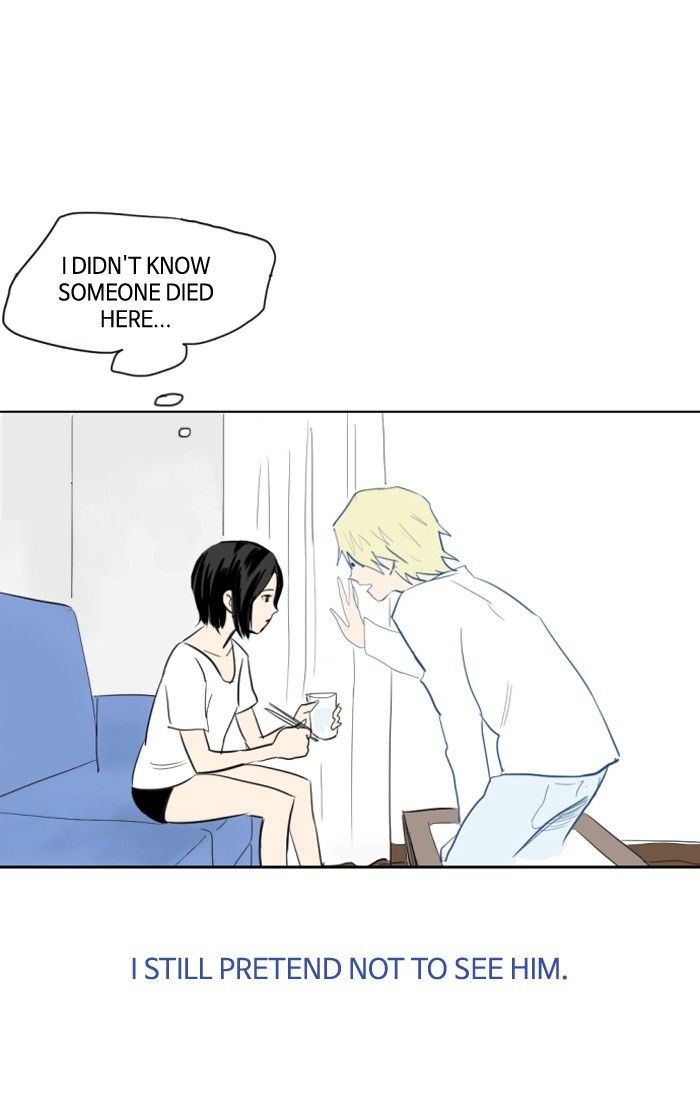
Image from webcomic "My Boo"My Boo is a Korean webcomic. It's about the evolving relationship between a human and a ghost, about distance and acceptance.

I can't speak or write Korean, but as far as I can gather from online sources, the author's name is 정서, also transliterated as Jeong Seo, Jung Seoa, Jungsuh, Jung Seo... Originally published  as 투명한 동거 on naver.com around 2016, the title of the comic has also been translated as "Transparent Cohabitation" or "Invisible Roommate". It appears there are some English translations online, but the one looking most official to me appears to be My Boo published in late 2017 on webtoons.com. The English feels clunky in some places, but overall it's a fluent read. I've noticed that at least one other translation missed a few panels that were present on Webtoons. On the other hand Webtoons lacks the afterword (see links at the bottom).

I'll stick with the title "My Boo" and refer to the author as Jeongseo (the form used on webtoons) and "they", since I don't know their gender.

The main characters are Yuri So (So Yeori), a young woman working as a translator. She can see and hear ghosts, but since events in her childhood she does her best to ignore them. She did not expect that a young man, Jun Ko (Go Joon) died in the house she just moved into, and that his ghost still "lives" there, since ghosts cannot stray far from the place of their death.

I love the slow intimacy of this story. My Boo shows us the hurt both as it is inflicted and as it is hold on to, and we get to sit with it. The characters reflect on their behavior and feelings and attempt to talk about that. In my impression too many mainstream media show relationships (usually following standardized models) but never really explore and question them. Instead they too often just display them as either good or bad, and then leave the topic. The relationship(s) we get to see in My Boo are problematic, but the comic accepts that, and watches, prods and nudges to get a better feel for what's up.

The story is told in 47 episodes, each many screen pages long with several dozen panels. Jeongseo uses varying panel sizes and positioning, and is not afraid to extend the gutters into large, blank spaces stretching out. It is one of the means they employ to turn the volume down. It's not a silent comic, but it's certainly quiet. The choice to often just focus on the characters and forego the background when zooming it adds to that quietude. Similarly, the coloring feels minimalist for many sequences.
The comic is told almost completely from the point of view of Yuri So. Her thoughts are presented in first person narration, in sparse words, as captions between panels. While the main story of the unfolding relationship between Yuri and Jun is told chronologically, Jeongseo uses flashbacks (and a few flashforwards) to explore the characters' backgrounds. Sometimes, these are very short, often just a line or panel quoted from another part of the comic in which the context is told in greater depth. Many episodes start with such a hook, hinting at something larger, before the title and episode number signal the beginning of this episode's main narrative.

The calm melancholy echoing through this story, it's reflections and self-quotes, is enhanced by the repertoire of characters, scene types and locations: Most scenes show Yuri and Jun in their house, and you'll be familiar with the hallway, living room, garden, stairs etc. soon enough. We get a few conversations between Yuri and her friends Max and Sam, and a couple of scenes with Dana, Dana's mother, or both of them.

That makes the other scenes stand out so much more. The locations and persons we're only shown once.

Yuri So starts in a place of isolation, a conscious choice made years ago and turned into a lifestyle, to protect herself from the expectations of dead and living who might demand her time and labor, to use Yuri's ability for their own comfort. She ran away from this conflict after an attempt to befriend the ghost of a young girl killed in a traffic accident. The girl became clingy, and Yuri struggled to reconcile her two worlds, without success.

Jun Ko starts isolated, too. After the death of his parents he tried to drown his loneliness in social activity, yet was unable to form meaningful connections. After his own death he stayed alone in the house for three years until Yuri moves in.

Jun is desperate for company and does his best to accommodate Yuri's needs. Yuri needs more time to overcome her reservations. To her own confusion she not only agrees to become housemates but feels a growing bond. Still, foundation for their arrangement is the choice to keep it temporary: After a year, Yuri want to go abroad for studies.
They settle into their shared existence, find routines, watch each other reservedly. They fight, he hides, she relents. They feed the cats. They become romantically attracted, struggling with their differences.

I'll skip over some major parts of the comic, most importantly the involvement of Dana Song and the revelations of the shaman about the inevitable end. Bit by bit Yuri opens up and steps out of her isolation. She starts to accept herself, making peace with her ability to see the deceased. This must be a frightening process, but as her focus is on her housemate, so the comic stays focused on the two.

On webtoons, readers can leave comments, and fans of My Boo repeatedly expressed their wish for a satisfying romance, usually asking the author to give Jun a body. I'm glad Jun remains incorporeal until the end. Thus their relationship stays special and fraught, and they have to face how different they are.

From the beginning, their relationship has an end date. While the details change, they still have to come to terms with the approaching moment of parting. And while what they feel may be love, and loss, what they express is gratitude.

I loved that.

Thank you, Jeongseo.

~~~

Links:
Review by Heather on nerdloveshop.com: Manga Monday #17: Invisible Roommate
Goodreads page
Author's note (update #48) on mangarock and on mangakalot
Author's blog on naver.com (I believe)
https://twitter.com/jungseoa

asri: Photo of myself (Default)
Sharon Shinn/ Molly Ostertag: Shattered Warrior is a good SF comic about a human resistance in a dystopian world ruled and exploited by a militaristic alien race. It is tightly woven, has a lot of (inter-)personal drama, some romance, and it probably is in the YA genre (I seriously have no idea and am not really interested in genre boundaries). I became aware of the book because I'm a fan of the artist, Molly Ostertag (I recommend both her graphic novel Witch Boy as well as the webcomic she's drawing, Strong Female Protagonist).
I particularly liked that some scenes were done without any words. I have a soft spot for "silent" comics.

Yesterday I finished Thanos Rising, a mini-series by Jason Aaron and Simone Bianchi. I had expected better stuff by Jason Aaron, after his female Thor (I still want to read his other Thor stuff) and Star Wars. Thanos Rising suffers because Thanos is the only character with an inner life. All the others remain flat and boring. This is particularly blatant for the female lead, which plays an important part but remains utterly, ridiculously unmotivated.
Also, I'm a bit over this Dark & Brooding & Selfrighteous Loner Whom Nobody Understands Nor Loves. That trope is not enough to carry a story.

Originally posted to my G+ stream on 2018-05-18

Page generated Dec. 30th, 2025 06:36 pm
Powered by Dreamwidth Studios